Swiss Government Excellence Scholarships 2027-28: CHF 2,450 a Month and How to Win It
Swiss Excellence Scholarships 2027-28: CHF 2,450/month and a supervisor-first application strategy.
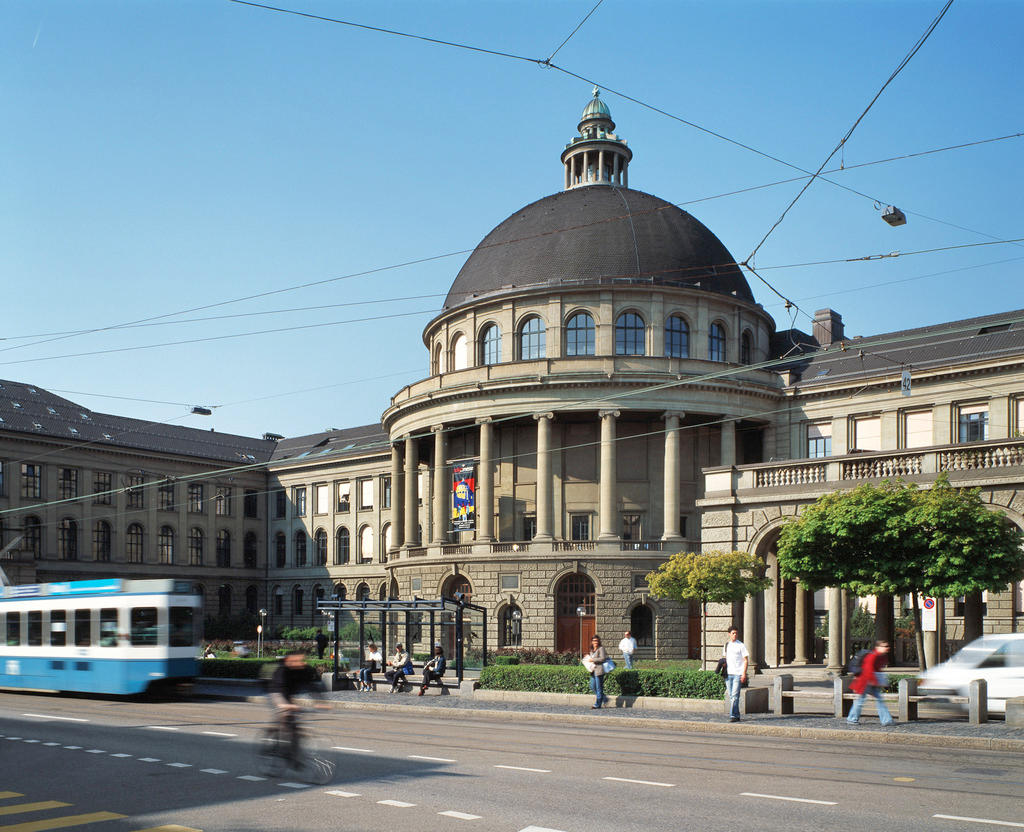
The Swiss Government Excellence Scholarship is one of Europe’s most generous research awards — and one of the least understood. It is not a degree scholarship in the usual sense: it funds a research stay of six to twelve months at a Swiss university, ETH Zurich, EPFL or one of the ETH-domain institutes, for early-career researchers who already hold a master’s degree. The 2027-28 round opened on 20 August 2026, and because every country’s deadline is different — some close in early October, others run to late November — checking your country’s date is step one.
What it pays
Research scholarships pay CHF 2,450 per month — among the highest government stipends in Europe, sized for Switzerland’s costs, though the official documents stress it is a scholarship, not a salary. Recipients also receive a one-off CHF 300 housing allowance, health insurance, and a half-fare travel card; tuition is typically exempted at public institutions. The standard award runs up to 12 months with a fixed start of 1 September 2027 and no extensions. Art scholarships — open to a smaller list of countries — fund an initial master’s degree in an artistic field, on slightly different terms.
| Swiss Government Excellence, 2027-28 | Detail |
|---|---|
| Monthly payment | CHF 2,450 (research scholarships) |
| One-off extras | CHF 300 housing allowance, health insurance, half-fare travel card |
| Duration | Up to 12 months, fixed start 1 September 2027, no extensions |
| Age ceiling | 35 (born after the cut-off date in the guidelines) |
| Prerequisite | Master’s degree before departure + a written supervisor acceptance from a Swiss institution |
| Round opened | 20 August 2026; country deadlines run from early October to late November |
| Decisions | By end of May 2027 at the latest |
Age matters: the ceiling is 35 (born after a cut-off date stated in the guidelines), and applicants must already hold a master’s or equivalent before departure.
The supervisor comes first
Here is the mechanism that separates winners from rejected files: you must secure a Swiss academic supervisor who agrees to host and mentor your research project before you apply. The application requires their written acceptance. That makes this scholarship less like a lottery and more like a job application — your real task in October is not paperwork but outreach: identifying professors at Swiss institutions whose research matches your project, sending focused emails with your proposal and CV, and converting interest into a signed acceptance.
Selection then runs through Swiss diplomatic representations in your country, with the Federal Commission for Scholarships (FCS) assessing three things: the candidate’s profile, the quality of the research project or artistic work, and synergies for future research cooperation between Switzerland and your country. Final decisions arrive by the end of May 2027 at the latest.
From research stay to full doctorate
Because the award funds months rather than degrees, smart applicants design the stay as a first chapter. A twelve-month stint at ETH, EPFL or Basel does three things at once: it produces a publishable chunk of research, it converts you from cold-contact applicant to internal candidate, and it lets Swiss professors observe your work before committing doctoral funding. Swiss doctoral positions pay real salaries — typically CHF 50,000-90,000 a year depending on canton and institute — so the excellence scholarship is best understood as a funded audition for one of them. Applicants who frame their proposal as the opening move of a longer Swiss research arc give supervisors a reason to say yes twice.
The file itself
The document set is compact but tightly specified: a research project of up to five pages, a CV, two academic references, copies of degrees, and the supervisor’s acceptance letter — plus, for art scholarships, a portfolio. Files are read by academics, so the five-page proposal carries the weight: a sharp question, a method that fits the host group, and a paragraph on cooperation with your home institution. Country quotas make this a national competition, and past laureates from your country are often the best calibration of what wins.
Strategy that matches the mechanics
- Check your country’s deadline this week. The official SERI list publishes each country’s date — the spread runs from early October to late November 2026, and quotas are national, so you compete only against compatriots.
- Treat supervisor outreach as the project. Two focused proposals beat ten generic emails; read the group’s recent papers first. Our supervisor email templates transfer directly to Swiss outreach.
- Write the proposal for cooperation. The third selection criterion rewards projects that build a bridge between your home institution and the Swiss host — say explicitly what continues after the stay ends.
- Beware phishing. SERI has published an official warning: the application is free, and anyone demanding payment for "visa and social insurance costs" in the scholarship’s name is a scam. No agent can improve your odds.
How it fits a bigger plan
Because the award funds a research stay rather than a full degree, many applicants pair it with a doctoral pathway: the stay becomes a year inside a PhD you fund through a Swiss assistantship afterwards — Swiss doctoral salaries, among the world’s highest, make that arithmetic work, as our country-by-country stipend comparison shows. Others use it as a postdoctoral landing. Either way, the live Swiss listings below — the scholarship card itself plus ETH, EPFL and Lausanne positions — show where the ecosystem you are applying to actually sits.
Frequently Asked Questions
How much is the Swiss Government Excellence Scholarship?
The ESKAS/FCS scholarship for foreign researchers and artists pays a monthly payment of CHF 1,920 for Master's-level and postgraduate researchers (2025-2026 level) with doctoral researchers receiving the same base plus where applicable a CHF 300 annual allowance; the award includes tuition waiver, health insurance, housing allowance and a half-fare travel card. No dependant allowance is paid, so families budget separately.
Who nominates me for a Swiss Government Excellence Scholarship?
You apply through the Swiss embassy in your country with a letter of acceptance from a Swiss academic supervisor — the professor's commitment letter is the decisive document. Embassies pre-screen and forward dossiers to the FCS committees, which decide by subject area. Deadlines vary by country but typically fall in September-December for the following academic year.
What are my odds for the Swiss Excellence Scholarship?
Globally roughly 10-15% of submitted dossiers succeed, with big variance by country quota and field. The strongest applications pair a supervisor letter describing a concrete research role, a project matching the group's active funding, and a CV showing publications or exhibitions. Art scholarships are judged on portfolio; check the country-specific call notes for weighted criteria.
Official sources and further reading
Similar opportunities

ETH AI Center
ETH AI Center Doctoral Fellowships 2026: fully funded AI doctoral fellowships at ETH Zurich fostering interdisciplinary collaboration. Deadline: 27 October 2026, 16:00 CET.

University of Melbourne
ARC Future Fellowships are four-year mid-career research fellowships funded by the Australian Research Council and hosted by Australian universities such as Melbourne. Applications are submitted by the university on the researcher's behalf during scheme rounds announced by the ARC, so prospective applicants should engage their target school or institute first.
ETH Zurich
Fully funded ETH Zurich doctoral position on generative AI-based computational design methods for engineering. Competitive salary. Deadline: 1 November 2026.